What losing a construction company taught me
Lessons learned: building, losing and starting again
If you spend long enough in construction, you eventually realise that the projects you learn the most from are rarely the ones that go perfectly.
The lessons that stay with you tend to come from mistakes, difficult decisions, unexpected problems and the moments you'd rather not repeat.
When I started out, I thought success was fairly easy to measure.
More projects.
More staff.
More turnover.
A bigger office.
A bigger business.
Like many people in construction, I spent years chasing growth.
And for a while it worked.
The business grew, the projects became larger and more complex and, from the outside, things looked successful.
What I didn't fully appreciate at the time was that growth and success are not always the same thing.
A company can be growing rapidly whilst becoming more vulnerable at the same time.
That was certainly true in my case.
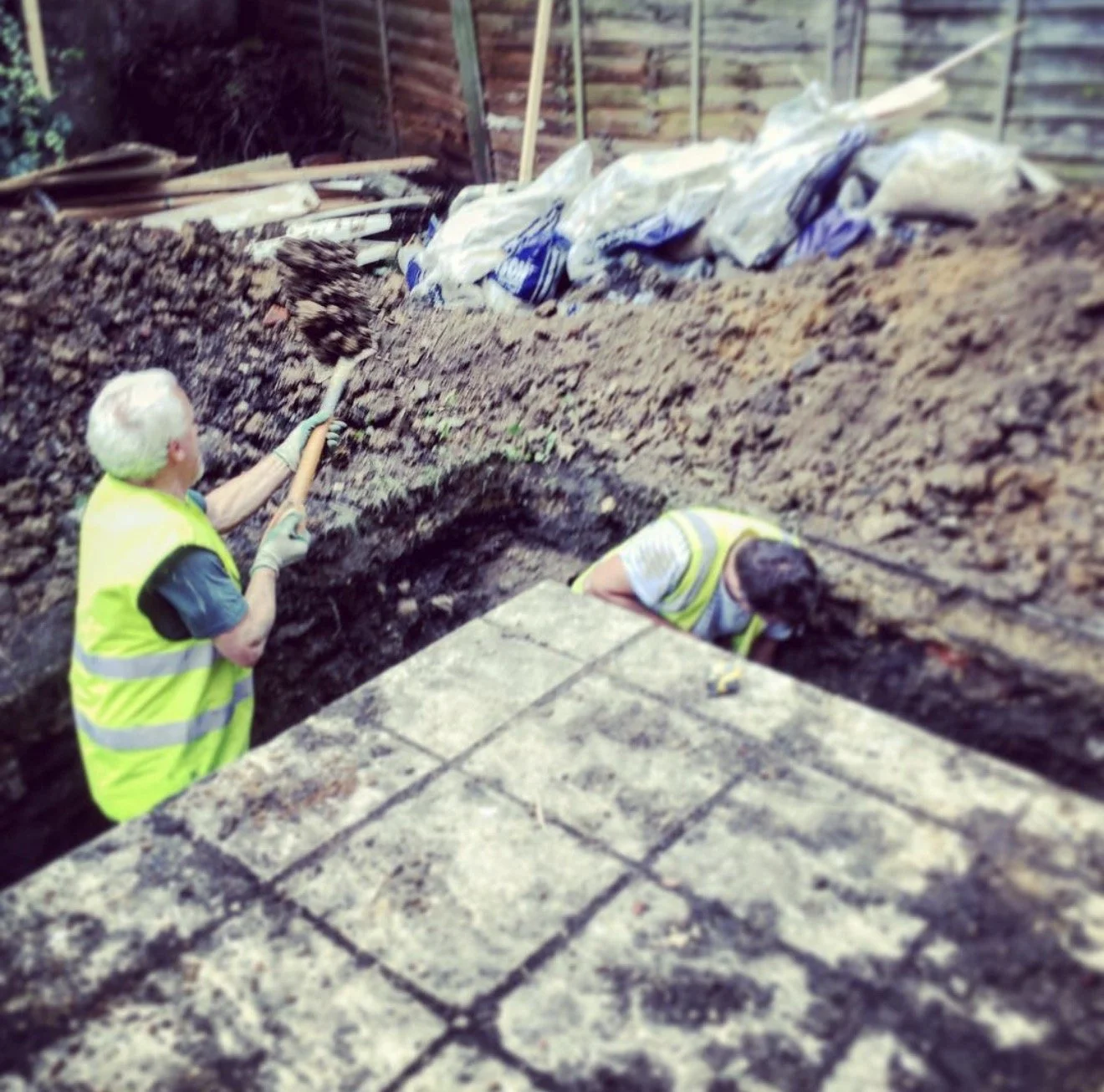
Breaking ground on our first independent project
The period around Covid exposed weaknesses that had been building for years.
Work disappeared almost overnight. At the same time we still had wages to pay, projects to deliver and commitments to honour. The years that followed brought another challenge. Projects that had been priced in one economic environment suddenly had to be delivered in another. Material costs rose dramatically. Labour costs rose dramatically. Jobs that had looked profitable became loss-making.
There were external factors involved.
There were also mistakes.
Mine.
I became too focused on turnover and not focused enough on profitability.
I carried risks for too long.
I believed hard work could solve problems that really required different decisions.
Eventually the company entered liquidation.
At the time it felt devastating.
With a bit of distance, I can now see it differently.
Not as something I am proud of, but as one of the most valuable and expensive educations I could have received.
The experience forced me to rethink almost everything I believed about running a construction business.
One of the biggest lessons was that turnover is vanity and profit is reality.
For years I looked at turnover as a measure of success. The bigger the number, the better things must be going.
What I eventually learned is that turnover can hide all sorts of problems.
A £10 million business can fail.
A £1 million business can thrive.
Profit is what keeps a business healthy. Without it, turnover is just a number.
Another lesson was the importance of cashflow.
One of the things that surprised me most when I entered construction was how many payment disputes occur.
Too many clients assume builders are large organisations with endless resources behind them. Most aren't.
The reality is that construction businesses spend money long before they receive it. Wages need paying every week. Materials need paying for before they arrive on site. Subcontractors expect to be paid promptly. HMRC certainly expects to be paid promptly.
A surprising number of projects end up in some form of dispute over money. In my experience, around one in three projects ends up involving some sort of delayed payment, withheld payment or argument about money.
It is exhausting for everyone involved.
It distracts from the project.
It frustrates site teams.
It damages relationships.
In some cases it can even starve a project of the resources it needs to progress properly.
The health of a construction project is often closely linked to the health of its cashflow.
I also learned that growth is rarely progress in construction.
Construction is full of businesses chasing growth.
You see new offices.
More vans.
More staff.
More hoardings.
More projects.
It looks impressive.
Sometimes it is impressive.
But what I've learned is that the thing that won those projects in the first place is often the very thing that gets diluted as a business grows.
The owner becomes less involved.
Decisions get pushed further down the chain.
Communication becomes slower.
Responsibility becomes blurred.
The Chinese whispers start.
The larger a business becomes, the harder it is to maintain control and consistency.
Growth can absolutely be a good thing.
But only if you can preserve the culture, standards and accountability that got you there in the first place.
I've become much less interested in being the biggest and much more interested in being good.
Fixed-price contracts taught me a few painful lessons too.
Clients understandably like fixed prices.
Builders like them too.
The challenge is that construction projects can last many months, sometimes years.
When material costs, labour costs or market conditions change dramatically, a fixed-price contract can quickly become a dangerous place to be.
That doesn't mean they should be avoided.
It means they need to be approached with care and realism.
Communication is another area where I've changed my thinking over the years.
People often assume disputes happen because of technical issues.
Sometimes they do.
Most of the time they don't.
Most disputes are about communication.
Or money.
Usually both.
A client isn't normally upset because a structural beam needed to be larger than expected.
They're upset because nobody told them.
They're upset because the cost changed unexpectedly.
They're upset because they feel they've lost control of the project.
Most clients can deal with problems.
What they struggle with is uncertainty.
The older I get, the more I believe that communication is one of the most important parts of construction.
Not because it prevents problems.
Because it prevents problems becoming disputes.
Another lesson is that good people need to be paid well.
Everybody wants value for money.
So do I.
But there is a limit to how cheaply good work can be delivered.
You can almost always find somebody willing to do something cheaper.
The question is whether you actually want them doing it.
One of the lessons I've learned is that good people need to be paid properly.
The best tradespeople have options.
The best site managers have options.
The best suppliers have options.
My job is not to deliver the cheapest possible project.
My job is to deliver a good project, carried out by good people, in a good way.
That doesn't mean spending money unnecessarily.
It means understanding where quality comes from and recognising that quality rarely appears by accident.
The final lesson is probably the most important.
Trust and reputation are everything.
I work close to home.
Most of our projects are within a few miles of our office.
I regularly see former clients years after a project has finished.
I see them in cafés, on the school run and walking around Battersea and Clapham.
You can't really hide from your reputation when you work that close to home.
Every project becomes part of your story, whether you like it or not.
For a while I viewed the liquidation as the defining event of my professional life.
Today I see it differently.
It was one chapter.
An important chapter, certainly.
But not the final one.
The experience made me more cautious, more thoughtful and more aware of risk than I was before.
It forced me to question assumptions I had held for years.
And ultimately it led to the creation of Bloom.
Would I rather have learned those lessons another way?
Absolutely.
But I would be lying if I said they haven't made me a better business owner, a better project manager and, I hope, a better builder.
Experience is a great teacher.
Failure is often a better one.
Ross Malone
Founder, Bloom Builders